
Choosing the Right Pump - Water vs Trash Pumps
What's the difference between a water pump and a trash pump?
While all pumps move liquid, not all pumps are designed to handle all liquids. There are two main types, Water Pumps and Trash Pumps. And it’s important to know the differences so you can choose and use the right type of pump. Or, more accurately, so you don’t use the wrong one.
Water Pumps
Water pumps are built to handle clear, clean water without debris, think draining a pool, hosing down the yard on the farm, or providing water to irrigation systems. They’re able to move water quickly and efficiently over long distances.
Trash Pumps
trange name if you haven’t heard it before, but pretty accurate. Honda Trash pumps are full trash pumps, meaning they’re built to handle dirty water, with debris up to 35mm - and they can cope with things like leaves, twigs and stones, even mud and sludge. If the water you're dealing with contains these kinds of particles, a trash pump is your go-to.
The main difference between the two pumps is in the construction.
Honda Trash pumps have larger intakes and stronger impellers that can handle the strain of moving debris without clogging.
Water pumps, on the other hand, are designed with smaller, finer intakes and less rugged components.
Choose the right pump for the job
It’s crucial to choose the right pump for the job.
Using a water pump where debris is present can cause clogs, damage the pump, and significantly reduce its lifespan. If a water pump gets ‘clogged’ up with mud or leaves, it can stop working entirely, meaning costly downtime and delays to operations.
On the other hand, using a trash pump for clean water isn’t the best idea either. Trash pumps are built for the hard yakka, so they may move too slowly or consume more energy than necessary when dealing with clean water. They’re a specialist machine, not a do-it-all.
Honda makes both Water and Trash pumps, and makes them very well. That’s why many people choose to have one of each.
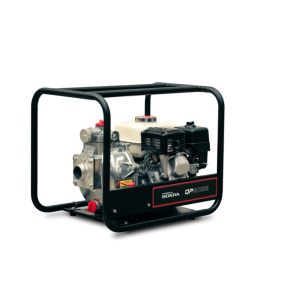 QP205E 2" High Pressure Framed Pump
Pump Type: High pressure heavy duty closed impeller
Total Head: 75 m
Max Discharge Capacity: 450 litres/min
$2,499 UP650 2” High Pressure Pump
Pump Type: High pressure water pump
Total Head: 75m
Max Discharge Capacity: 550 litres/min
$1,699 WB20 Water Pump
Pump Type: Centrifugal volume pump
Total Head: 32 m
Max Discharge Capacity: 600 litres/min
$1,099 RPP3PUMPE
Pump Type: Light Chemical Pump
Total Head: 40 m
Max Discharge Capacity: 757 litres/min
$2,399 RPP2PUMPE
Pump Type: Light Chemical Pump
Total Head: 40 m
Max Discharge Capacity: 757 litres/min
$2,099 RPP3PUMP
Pump Type: Light Chemical Pump
Total Head: 40 m
Max Discharge Capacity: 757 litres/min
$1,799 RPP2PUMP
Pump Type: Light Chemical Pump
Total Head: 40 m
Max Discharge Capacity: 757 litres/min
$1,499 QP205 2” High Pressure Pump
Pump Type: High pressure heavy duty closed impeller
Total Head: 75 m
Max Discharge Capacity: 450 litres/min
$1,849 $1,949 WT30 Trash Pump
Pump Type: Centrifugal trash pump
Total Head: 27 m
Max Discharge Capacity: 1210 litres/min
$2,648 $2,799 WT20 Trash Pump
Pump Type: Centrifugal trash pump
Total Head: 30 m
Max Discharge Capacity: 650 litres/min
$2,099 $2,199


