
Choosing the Right Mower - Petrol or Battery
Is Petrol or Battery right for your next mower? Join Peter and explore what you need to consider before buying your next mower.
Electric Battery vs. Petrol – which works better for NZ grass and climate?
Back in the day, mowers were all powered by petrol engines, and then along came the first AC electric models, but they had some pretty significant drawbacks – the cord being the big one. Early battery models weren’t very practical either, they didn’t have much grunt and they didn’t run long enough.
Now battery technology has advanced to the point where DC/battery mowers perform as well as their petrol-powered cousins. But which is best for you? Like most things, it depends...
Benefits/Advantages of Petrol Mowers
First let’s look at the benefits/advantages of petrol mowers. Just like motorbikes, they’re available in different CC ratings – generally the higher the CCs, the more powerful the engine (and also the longer the mower’s effective run time.)
So, for a smaller lawn a smaller engine will do, and as the lawn size and the workload increase, you’ll want to use a bigger power plant.
Powerful 4 stroke engines
Some manufacturers use two-stroke engines, which require pre-mixing oil and petrol. This is a fiddly process, and two-strokes also tend to be noisier and smellier than 4 strokes. They’re also not nearly as powerful.
Honda petrol mowers are exclusively four-stroke. For all those reasons. They’re also fairly legendary engines, proven and refined, and engineered for smooth power delivery with loads of torque. They just go, and go.
All Honda petrol models feature a ‘one pull’ decompression system for easy starting – and the cord is placed higher up for better ergonomics – so you pull the cord, not a muscle.
Honda 4 strokes are also comparatively quiet, and produce lower emissions, than many other brands.
All day workhorses
Petrol engines are ideal for mowing large lawns, or for commercial contractors who are going to be working them all day, They can keep going as long as there’s petrol to fuel them – and a little bit of oil on hand to keep the moving parts happy. Unlike with batteries, there’s no recharging downtime.
They can push themselves
Some petrol models are self-propelled, and these are especially good for mowing up sloping lawns, covering large areas, or for when you’re going to be mowing for most of the day. It just makes the job a little easier and less sweaty. But then some battery models are also self-propelled. (We’ll look more closely at self-propulsion in part 3)
Maintenance matters
It’s always important to look after equipment, and petrol mowers are no exception. As well as fuel, they need regular top-ups of engine oil. And they should be regularly serviced to keep them running smoothly and safely, and ensure a long operating life.
You can do this maintenance yourself, getting parts when you need them from your Honda Outdoors dealer, or get them to do the service and tune ups for you.
Benefits/Advantages of battery mowers
Now let’s look at the benefits/advantages of battery mowers.
First, convenience. Battery mowers are always ready to go straight out of the shed – as long as you’ve remembered to recharge the battery. There’s no priming or refuelling, push the ‘go’ button and you’re off.
Light, quiet and economical
They tend to be lighter than petrol mowers, if that’s important to you. They’re also noticeably quieter, and produce zero emissions. And they’re cheaper to run.
Understanding battery power
Battery tech has come a long way in a short time and now some battery mowers are just as powerful as petrol models.
The electric power equation itself is a bit complicated. It’s volts x amps = watts and what that figure ultimately means varies from mower to mower.
The most important power spec for batteries themselves is their capacity, and this is measured in amp hours – mowing is a high drain activity, but the higher the amp hours, the more juice you’ve got.
Battery capacity = Amp hours
All Honda battery (izyOn) mowers use the same (36 volt) battery, with a range of capacities. The 6 amp hour Lithium battery on this Honda izy-ON is good for about 55 minutes of regular mowing.
Of course, run time isn’t an issue if you have a backup battery or two – so you can be using one while the other is recharging.
Cooling technology
Some battery mowers – especially at the cheaper end – can have a tendency to run hot. Honda battery models have very effective cooling tech built in – a bit like your laptop, but not as annoying. This allows for continuous use without overheating. It also keeps batteries cool when fast charging.
Universal batteries
Another feature of Honda mowers is their Universal battery. Not only does it power the mower, you can also use it on other Honda electric equipment, like your hedge trimmer or blower.
Maintenance? Not much.
Battery mowers don’t need the same sort of maintenance petrol mowers do. Just keep them clean and dry and they’ll be perfectly happy. You’ll have to replace batteries now and again, but generally you can expect years of work out of a battery, if you treat it well.
They can also push themselves
Self-propulsion is also a feature of many battery-powered mowers. It makes the job easier, but will have an impact on the overall battery run-time.
So which is the best system?
For some, a good battery mower is going to be all they need. For others, a petrol mower will totally tick the boxes. That’s why Honda makes both.
But 4 stroke petrol mowers probably have the overall performance edge over their battery-powered friends.
It’s really over to you. The grass won’t care. If you need some help deciding, come into a Honda Outdoors store and talk through the options with a lawnmower expert.
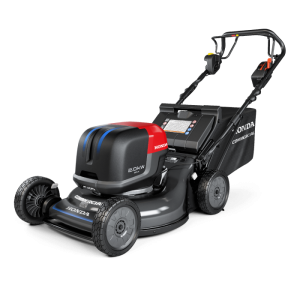 HRC216 58V 21" Battery Lawn Mower
Weight: 49 kg
Cutting Width: 530 mm (21")
Catcher Capacity: 74 litres
Drive: Self-Propelled
$3,699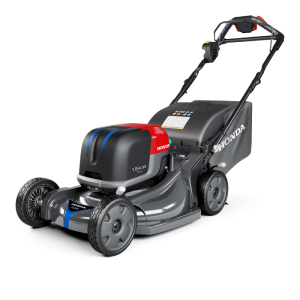 HRX217 58V 21" Battery Lawn Mower
Weight: 42 kg
Cutting Width: 530 mm (21")
Catcher Capacity: 77 litres
Drive: Self-Propelled
$2,799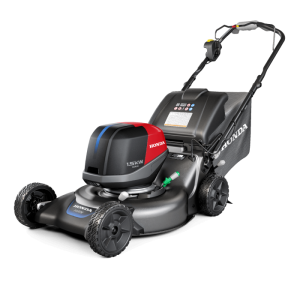 HRN216 58V 21" Battery Lawn Mower
Weight: 37 kg
Cutting Width: 530mm (21")
Catcher Capacity: 70 litres
Drive: Self-Propelled
$2,299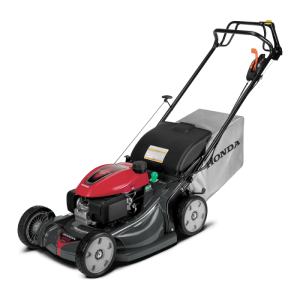 HRX537
Weight: 44.6 kg
Cutting Width: 530 mm (21")
Catcher Capacity: 85 litres
Drive: Self Propelled
$2,399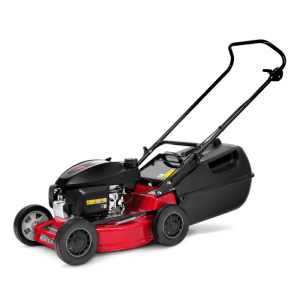
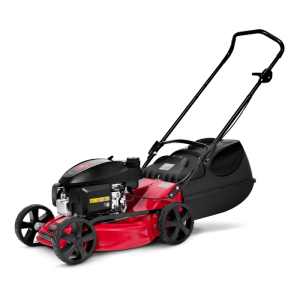 Yard Buddy Champ
Cutting Width: 460mm (18")
Catcher Capacity: 45 litres
Drive: Push
Engine: GCVx170
$899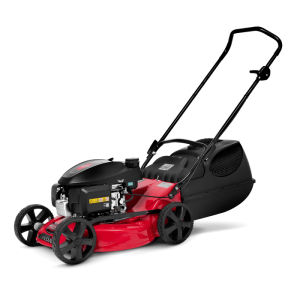 Yard Buddy Premium
Cutting Width: 460mm (18")
Catcher Capacity: 45 litres
Drive: Push
Engine: GCVx200
$999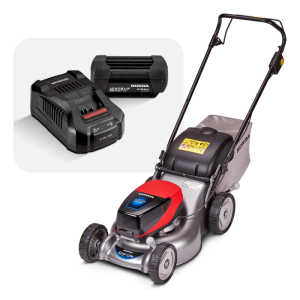 IZY-ON™ HRG416 Mower Kit (Includes 4Ah Battery & Charger)
Weight: 22.5 kg
Cutting Width: 410 mm (16")
Catcher Capacity: 42 litres
Drive: Push
$699 $1,097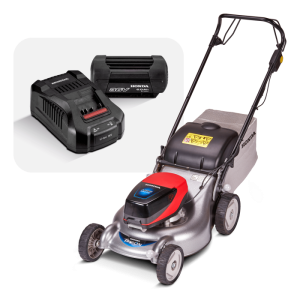 IZY-ON™ HRG466 Mower Kit (Includes 6Ah Battery & Charger)
Weight: 27 kg
Cutting Width: 460 mm (18")
Catcher Capacity: 50 litres
Drive: Self-Propelled
$899 $1,397 IZY-ON™ HRG466 Mower
Weight: 27 kg
Cutting Width: 460 mm (18")
Catcher Capacity: 50 litres
Drive: Self-Propelled
$899


